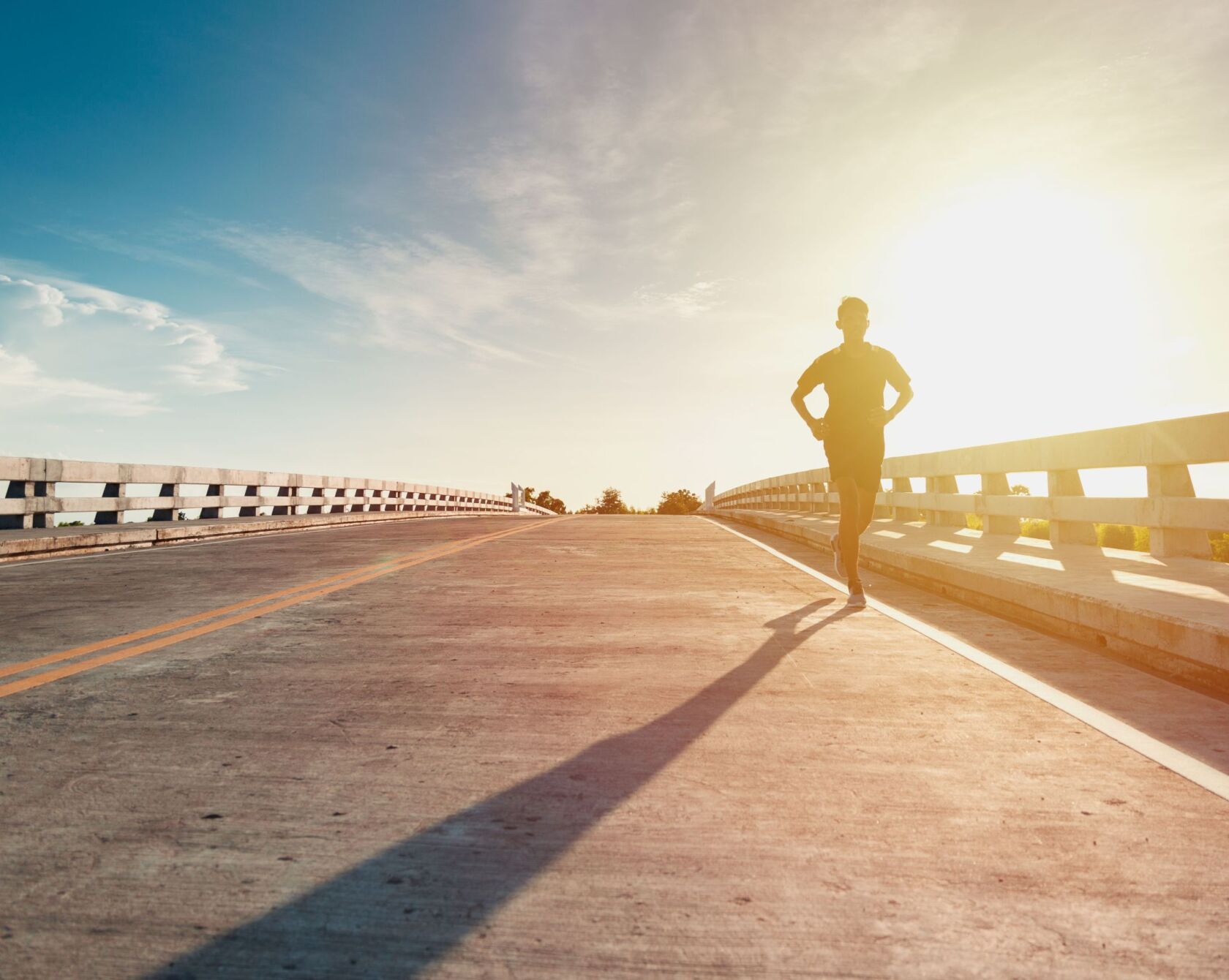
Regular exercise is the best thing we can do for our health. It’s good for our entire body—from our muscles to our metabolism to our mood—and it’s especially beneficial for our cardiovascular system. The good news: This is also true in the summer. When it's hot, there are just a few simple things we should keep in mind to ensure that exercising remains healthy and safe.
In general, it is recommended to engage in at least 150 to 300 minutes of light to moderate physical activity per week, enough to make us break a sweat and get our hearts pumping (a feeling of “some exertion”). Interval training, in which you occasionally train above this range, is usually possible as well. In addition, 2–3 sessions of strength training per week are recommended—especially for people 65 and older, as well as those with metabolic conditions such as obesity, high blood pressure, or diabetes. It’s a good idea to do additional regular coordination and balance exercises, especially after age 65, to help prevent falls.
Choosing the Right Time
Schedule your physical activities for the cooler times of the day—early in the morning or in the evening. This has a twofold advantage: Not only is it cooler, but ozone and particulate matter levels are also higher during the day when traffic is heavy. Avoid the hottest hours of the day, between about 11 a.m. and 4 p.m., and choose shaded routes. On very hot days, it’s also a good idea to have an alternative indoors.
Choosing the Right Sport
In general, any sport is possible on hot days. However, activities that allow the body to dissipate heat effectively—such as jogging, biking, swimming, and, in general, activities in and around the water—are particularly suitable.
Drink enough, but not too much
Drink before, during, and after exercise, and use your sense of thirst as your main guide—for most people, this is a reliable indicator. On hot days, you’ll need more. A light-colored urine is a good, simple indicator. For longer or more intense workouts (lasting more than an hour), it’s best to drink beverages containing a little salt (electrolytes), rather than just plain water. But don’t try to “stock up” on fluids: Your body can only absorb about one liter per hour anyway.
Slow down and adapt
On hot days, reduce the intensity and duration of your activity. It’s completely normal for your heart rate and perceived exertion to be higher and your pace to be slower in hot weather. Sensitivity to heat varies from person to person; however, everyone should exercise caution when temperatures reach around 30 °C. Also pay attention to the humidity: When it’s muggy, sweat doesn’t evaporate as easily and your body has a harder time regulating its temperature—in that case, it’s better to move your workout indoors. It takes your body one to two weeks to get used to the heat—so be sure to take it easy at first.
Remember to use sunscreen
Wear light, loose-fitting, breathable clothing, a hat, and sunglasses—and don’t forget the sunscreen.
Take Warning Signs Seriously
Weakness, dizziness, nausea, headaches, or muscle cramps can be signs of overheating. In this case, stop the activity immediately, go into the shade, cool off, and drink some water. Confusion or collapse is a medical emergency—call 144.
A note for beginners and anyone with pre-existing conditions
Anyone who is returning to exercise after a long break or just starting out should get a health checkup to work with their doctor to determine the appropriate intensity and type of exercise. Anyone with a chronic condition or who takes medication regularly (for example, for heart conditions, high blood pressure, or diuretics) should pay special attention to staying well-hydrated during hot weather and consult a doctor if in doubt—please do not adjust your medication on your own because of the heat.
Enjoy the summer—stay active and adapt well to the heat. Your body and your heart will thank you for it.