Nowadays, bypass surgery no longer necessarily requires the sternum to be opened. We are among the pioneers of minimally invasive bypass surgery in Switzerland and offer patients modern, gentle procedures with a high level of medical safety.
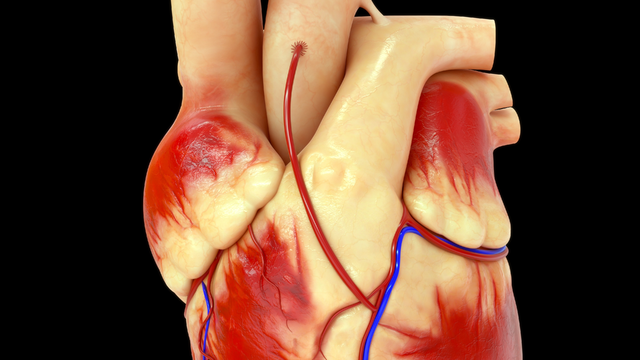
The coronary arteries supply the heart muscle with oxygen and nutrients. If they narrow or become blocked, blood flow to the heart can be impaired. With bypass surgery, we create new blood pathways and thereby improve blood flow to the heart muscle. In addition to traditional surgical procedures, we are increasingly turning to minimally invasive techniques. Access is gained through a small incision between the ribs. In many cases, the sternum remains intact.
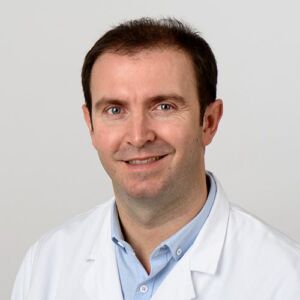
“Many patients are surprised to learn that bypass surgery can often be performed today without opening the sternum. Minimally invasive surgery allows us to offer selected patients a treatment that is both effective and gentle,” explains Stak Dushaj, Senior Attending Physician.
For patients, this often means less pain, faster recovery, and a more predictable healing process. We were the first cardiac surgery department in Switzerland to establish the MICS-CABG procedure for the minimally invasive treatment of multivessel disease. Today, this method is an integral part of our range of treatments. We already perform about one-third of our isolated bypass surgeries using minimally invasive techniques.
We also perform these procedures using robot-assisted techniques. High-precision robotic technology helps cardiac surgeons perform the procedure with the utmost precision and in a way that minimizes tissue damage.
An individualized assessment provides peace of mind
A minimally invasive bypass procedure is not always the best treatment option. Key factors include the location and number of narrowed blood vessels, as well as any existing comorbidities. That is why we carefully assess your individual situation and provide you with comprehensive advice on the various treatment options.
Dushaj emphasizes: “The focus is not on the method, but on the person.” “For each patient, we carefully evaluate which procedure offers the greatest safety and the best long-term treatment outcomes.”
Our goal is to work with you to find the best possible treatment. In doing so, we place great emphasis on transparency, security, and clear communication. We want you to understand what treatment we recommend and why. From your initial examination through follow-up care, we’ll work closely with you and be there to answer any questions you may have. This personalized care builds trust and lays the foundation for successful treatment.
Experience and Innovation for Every Treatment
Minimally invasive bypass procedures require extensive experience and precise planning. That is why we work in interdisciplinary teams made up of specialists in cardiac surgery, cardiology, anesthesia, and nursing. Together, we will assess your individual situation and determine the best treatment strategy. Depending on the findings, we perform the procedure as a purely surgical procedure or combine it with catheter-based treatment. Such hybrid approaches allow us to make targeted use of the benefits of various therapies. Our many years of experience with minimally invasive and robot-assisted procedures, modern surgical techniques, and the research expertise of a university hospital form the foundation for treatment based on the latest scientific findings. This enables us to treat even complex coronary artery diseases safely and gently while ensuring the highest quality standards. For referring physicians, minimally invasive bypass surgery offers additional treatment options for selected patients with coronary heart disease.
Heart Bypass Surgery
If narrowed or blocked coronary arteries impair blood flow to the heart muscle, bypass surgery can help. At the USZ, the appropriate treatment is determined on an individual basis through an interdisciplinary approach by specialists in cardiology and cardiac surgery.