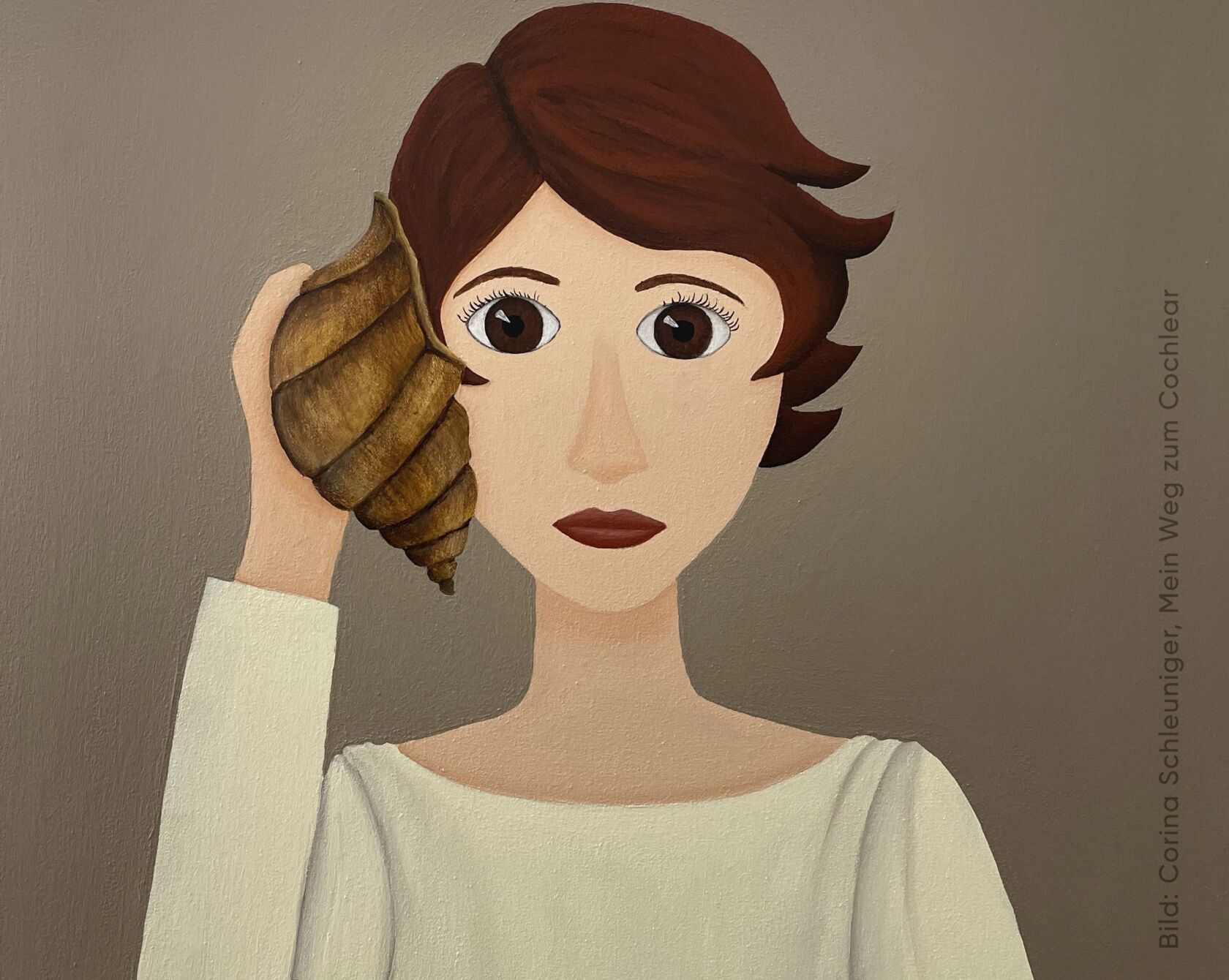
A cochlear implant makes hearing possible when all other options have failed. In October, the 2,000th patient was treated at the University Hospital of Zurich. A cochlear implant was inserted. Thanks to this, 55-year-old Corina Schleuniger can hear again after losing her hearing completely.
Cochlear implants (CI) are primarily used as a hearing aid for children born deaf. But even people who have lost their hearing later in life can improve their hearing again with a cochlear implant. At the specialized cochlear implant center at the University Hospital of Zurich, 55-year-old Corina Schleuniger received the 2,000th implant in early October. A cochlear implant (CI) implanted at the USZ.
Good hearing in old age helps prevent loneliness and cognitive decline
“Good hearing is essential for participating in social life, even in old age,” said Alex Huber, director of the Department of Ear, Nose, Throat, and Facial Surgery and head of the Cochlear Implant Center at the USZ. “When conversations, listening to the radio, and talking on the phone are no longer possible, social isolation becomes a risk. However, the lack of interaction and stimulation not only dampens one’s zest for life; it can also accelerate the progression of dementia and thereby lead to a premature loss of independence.” That is why more and more older men and women are opting for a cochlear implant when a hearing aid is no longer sufficient. “There is no age limit for a cochlear implant,” says Alex Huber. “Because hearing with a cochlear implant is not directly comparable to natural hearing, cochlear implant users must learn to hear with it and practice repeatedly.”
The Cochlear Implant: A New Hope After Hearing Loss
That’s how it was for Corina Schleuniger, too. The freelance artist has lived with a hearing impairment since birth. However, with hearing aids and lip-reading, she experienced hardly any limitations in her daily life. Although she was nearly deaf in one ear, her hearing in the ear with the better hearing was suddenly lost following a sudden hearing loss. “I like to be active and around people. But I found myself withdrawing more and more. Conversations were no longer possible. When everyone on the train jumped to their feet, I could only assume there was an important announcement.” After just a short time, it became clear to her that she wanted to take advantage of the opportunity to hear again with a cochlear implant.
It takes patience to learn to hear again
Six months ago, Corina Schleuniger received the first implant at the USZ—the 2,000th. This was her second USZ implant. Both times, she was able to move around again shortly after the procedure and was discharged from the hospital on the third day. “Learning to hear with a cochlear implant does take some patience,” says Corina Schleuniger. In everyday life, she can compensate for her hearing loss by using the lip-reading skills she learned earlier. “But during auditory training, I’m not allowed to read lips, of course, and that makes it pretty exhausting. Above all, though, I had to adjust my expectations of myself and my impatience regarding my progress.” What helped her was that, before deciding on a cochlear implant, she was able to talk to other cochlear implant users about their experiences.” These contacts were facilitated through the USZ’s CI Center and the patient organization Pro Audito Switzerland.
Finding Joy in Hosting Guests and Conversations Once Again
“I was thrilled right after the first implant, despite the challenges. Because of my hearing loss, I had barely been participating in social life anymore. Being at the table during conversations yet feeling excluded was very stressful for me. Now I enjoy inviting guests over again and can participate in conversations. The people around me have also noticed this positive change.” Can she still remember which sounds she was able to recognize first? “Yes, of course. And, funny enough, it wasn’t anything loud. It was birdsong. And it was overwhelming.”