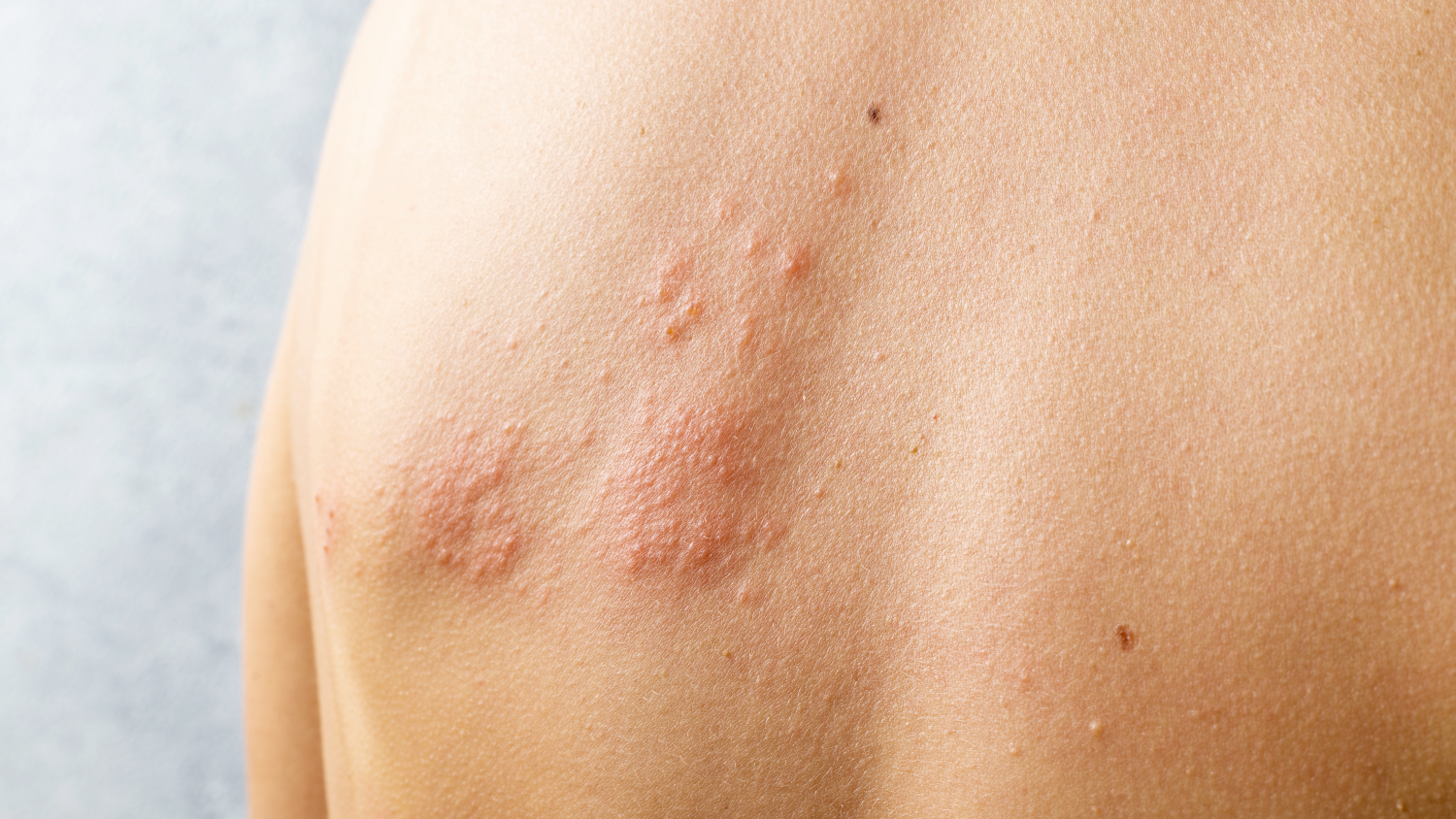
It is estimated that one in three people in Switzerland will develop shingles at some point in their lives. This painful skin condition is caused by the varicella-zoster virus. Vaccination is recommended for people aged 65 and older and for those at high risk.
Shingles is caused by the varicella-zoster virus. These are the same viruses that cause chickenpox. After a bout of chickenpox, the varicella viruses lie dormant, unnoticed, in the body’s nerve ganglia. If the immune system is weakened—for example, due to the flu or stress—these viruses are reactivated, leading to shingles. In Switzerland, it is estimated that one in three people will develop shingles at some point in their lives.
What are the symptoms of shingles?
“When the immune system is weakened, the virus multiplies, and the body responds with an inflammatory reaction,” explains Christian Greis, a senior physician in the Department of Dermatology. Early symptoms may include fatigue and a mild fever. A few days later, a red, itchy rash appears, accompanied by the formation of blisters. The pulling or stabbing pains on the skin are often accompanied by an unpleasant tingling sensation. Unlike chickenpox, the rash is localized and often appears on the trunk or face in the form of a stripe or band, hence the name shingles.
“It’s important to see a doctor early on so that shingles can be treated properly from the start.”
How is shingles treated?
The focus is on providing appropriate pain management. Also, the blisters should not be picked at, as this can lead to a bacterial infection. The condition is usually mild, and the rash typically clears up within two to four weeks. Depending on the situation, antiviral treatment may be administered in the form of tablets.
Chronic Nerve Pain Following Shingles
However, shingles is not always a harmless condition. Especially after an illness affecting the head, a permanent and painful nerve inflammation—known as postherpetic neuralgia—can develop, which in extreme cases can persist for months or even years. Fortunately, that rarely happens.