Cure sepsis by replacing the blood plasma? An international study initiated by the USZ is investigating a new therapeutic approach.
Sepsis, commonly known as “blood poisoning”, is a life-threatening medical emergency. The mortality rate in severe cases is high. For hospitalized patients, it was around 20% in Switzerland in 2020. The colloquial term is misleading. Sepsis is neither a poisoning nor, as is often assumed, an inflammation. What is true, however, is that sepsis is always caused by an infection. Regardless of severity and localization, it can lead to a pathological overreaction of the immune system, which attacks the patient’s own organs and leads to their failure.
New therapeutic approach
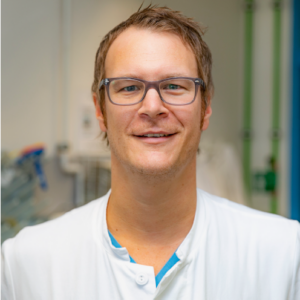
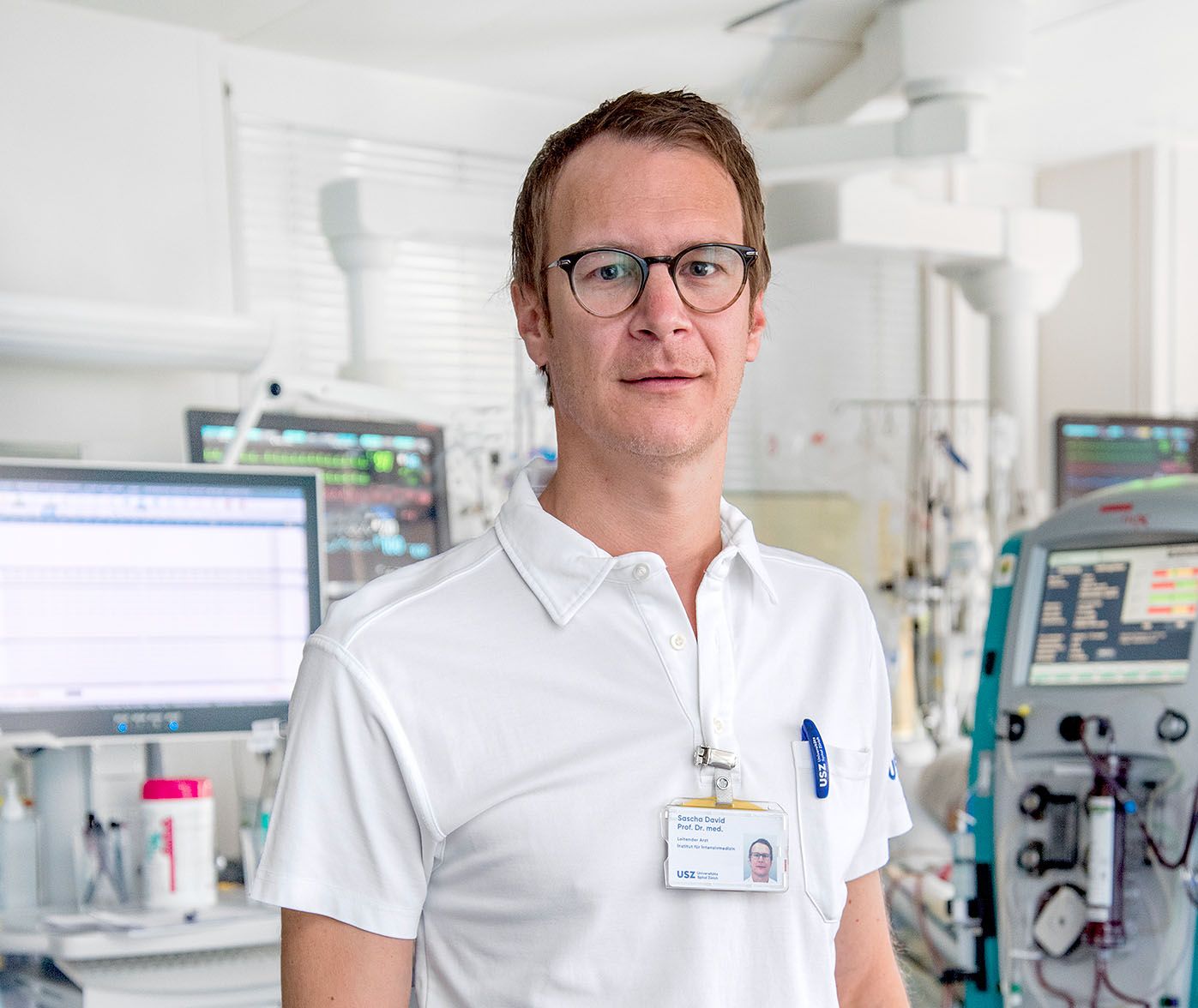
There is still no specific therapy for sepsis. Sascha David, Head Physician at the Institute of Intensive Care Medicine at the USZ, and his team now want to change this. In a controlled pilot study in 2021, the researchers achieved positive results for the first time with the exchange of blood plasma in people with severe septic shock. A broad international study on the subject is now being launched.
Proven procedure – new application
The replacement of blood plasma with healthy donor plasma is already used as a therapy for numerous other diseases, but this procedure is new for sepsis. The therapy is so promising because it combines two measures in one: “On the one hand, the harmful substances present due to the disease, such as inflammation- and coagulation-activating molecules, are removed from the blood. On the other hand, the healthy donor plasma is used to supply the patient with protective factors that are involved in anti-inflammatory processes and the body’s own coagulation inhibition and that the person suffering from sepsis lacks,” explains Sascha David. These processes make it possible for plasma exchange to improve blood circulation in the small blood vessels of the organs in a variety of ways.
International participation
However, the study must first prove whether the new therapeutic approach can actually reduce the mortality rate from sepsis. The broad participation shows how innovative and promising the project is: 25 centers from Germany, Austria and Switzerland will provide data. The project is also being funded by the German Research Foundation with 1.2 million euros. “If the effectiveness of the new therapy is confirmed, it will save the lives of many people,” says Sascha David, adding that “it is extremely fulfilling and also exciting to be part of medical progress through research”.