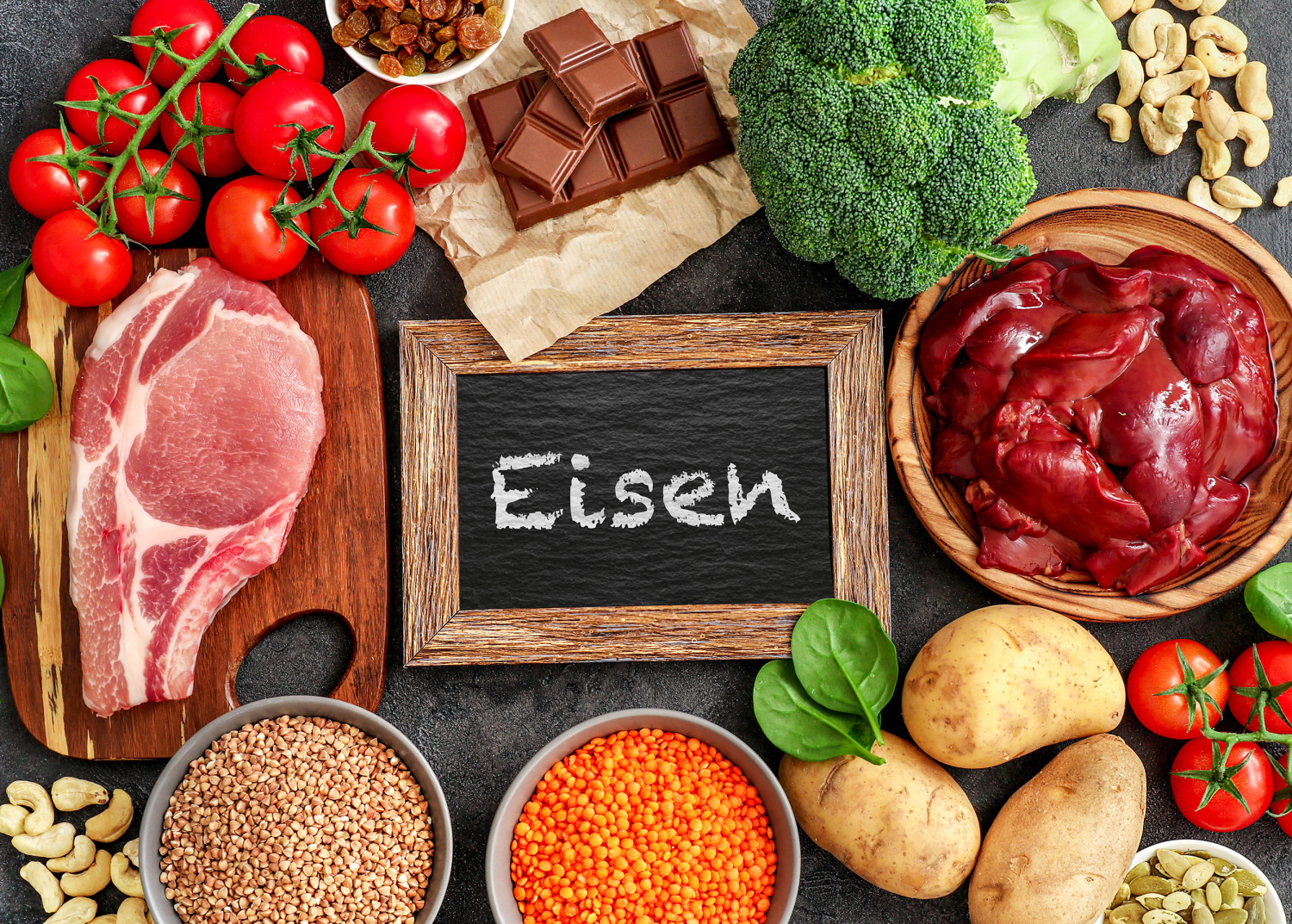
Iron is an essential component of red blood cells (erythrocytes). There it binds oxygen and enables it to be transported to the organs and tissues. An iron deficiency can therefore lead to a reduced oxygen supply to the body and cause symptoms such as tiredness, exhaustion and reduced performance.
As iron is essential for many bodily functions, the body builds up reserves. These iron stores are mainly found in the blood, bone marrow, spleen and liver. The iron is bound to the storage protein ferritin and released when required.
Iron is continuously required for the formation of new red blood cells. A chronic iron deficiency initially leads to the depletion of iron stores. If the deficiency persists, fewer and smaller red blood cells are produced. This results in so-called iron deficiency anemia (anemia).
An early sign of iron deficiency is therefore a reduced ferritin value with a normal number and size of red blood cells. Later on, the bone marrow only produces a kind of “economy version” of the red blood cells: they are smaller and fewer in number. This is when fatigue, concentration problems and reduced physical performance often occur.
Causes of iron deficiency
An iron deficiency occurs when the body uses or loses more iron than it can absorb.
Iron deficiency in women
In women before the menopause, regular blood loss during menstruation often leads to a depletion of iron stores. This can be particularly pronounced if there is also little iron in the diet, for example with a vegetarian or vegan diet.
A deficiency can also occur in phases with an increased iron requirement. This applies in particular to pregnant and breastfeeding women as well as growing children and adolescents. Whenever many new cells are formed, a sufficient iron supply is particularly important.
Iron deficiency in athletes
Competitive athletes have an increased risk of iron deficiency for various reasons. In long-distance runners, for example, red blood cells can be damaged by the repeated strain on the soles of the feet. Small amounts of iron are also lost through sweating. Iron absorption in the intestine can also be restricted during high-intensity exercise.
Regular checks of blood count and ferritin levels as well as targeted nutritional advice can help to prevent iron deficiency.
Hidden blood loss
Chronic blood loss often goes unnoticed for a long time. Causes can be, for example, inflammatory diseases of the gastrointestinal tract or tumors of the colon.
If an iron deficiency occurs in women after the menopause or in men over the age of 50, further clarification should be sought. This usually includes a colonoscopy and, if necessary, a gastroscopy to identify possible sources of bleeding.
Infections and iron consumption
Infections also increase the body’s iron requirements. If the iron stores are already low before an illness, the recovery phase can be correspondingly longer.
What to do in case of iron deficiency?
A balanced and iron-rich diet is the basis of any treatment. In principle, iron is better absorbed from animal foods than from plant sources. Meat, offal, fish and poultry contain so-called heme iron, which can be utilized particularly well by the body.
Good plant-based sources of iron include:
- Pumpkin seeds
- Sesame seeds
- Nuts
- Wheat germ
- Millet
The iron it contains is mainly in a form that the body must first convert. Vitamin C significantly improves absorption. It is therefore advisable to combine iron-rich meals with foods containing vitamin C such as oranges, kiwi, lemon juice or carrots.
When are iron supplements or iron infusions useful?
If iron deficiency anemia is already present, a change in diet is often no longer sufficient. In such cases, iron intake can be supplemented with tablets or infusions.
Various iron supplements are available. Some patients report side effects such as abdominal pain, nausea or constipation. In such cases, switching to a different preparation can be helpful.
If you follow a vegetarian or vegan diet, it may be useful to take food supplements to ensure an adequate supply of iron. Specially developed preparations often also contain vitamin B12, which should also be taken into account in a vegan diet.
An iron infusion may be necessary if iron absorption in the intestine is restricted or not possible to a sufficient extent. This applies, for example, to people with chronic inflammatory bowel disease or coeliac disease (gluten intolerance).
Beware of so-called “iron robbers”
If you want to consciously increase your iron intake, you should be careful not to consume iron-rich foods together with dairy products, coffee, black and green tea or cola. The same applies to iron tablets, which should not be taken with your morning coffee, but rather before lunch or dinner. Medications such as antibiotics also hinder the absorption of iron and should therefore be taken with a time delay.