Brain aneurysm

A cerebral aneurysm is a localized bulge in a cerebral artery. A weakness in the blood vessel wall can cause the affected blood vessel to balloon out. Many people live with a brain aneurysm without knowing it, since it often causes no symptoms. However, if an aneurysm ruptures, it can lead to a severe brain hemorrhage. It is estimated that about 2–3% of the population has a brain aneurysm.

In most cases, a brain aneurysm causes no symptoms and therefore goes undetected for a long time. However, it is crucial to note that, depending on their size, shape, and location, these aneurysms carry varying risks of rupturing and causing a severe brain hemorrhage (known as a subarachnoid hemorrhage). This tearing of the blood vessel wall, followed by a brain hemorrhage, is referred to as a rupture.

Illustration rupturiertes und nicht rupturiertes Hirnaneurysma

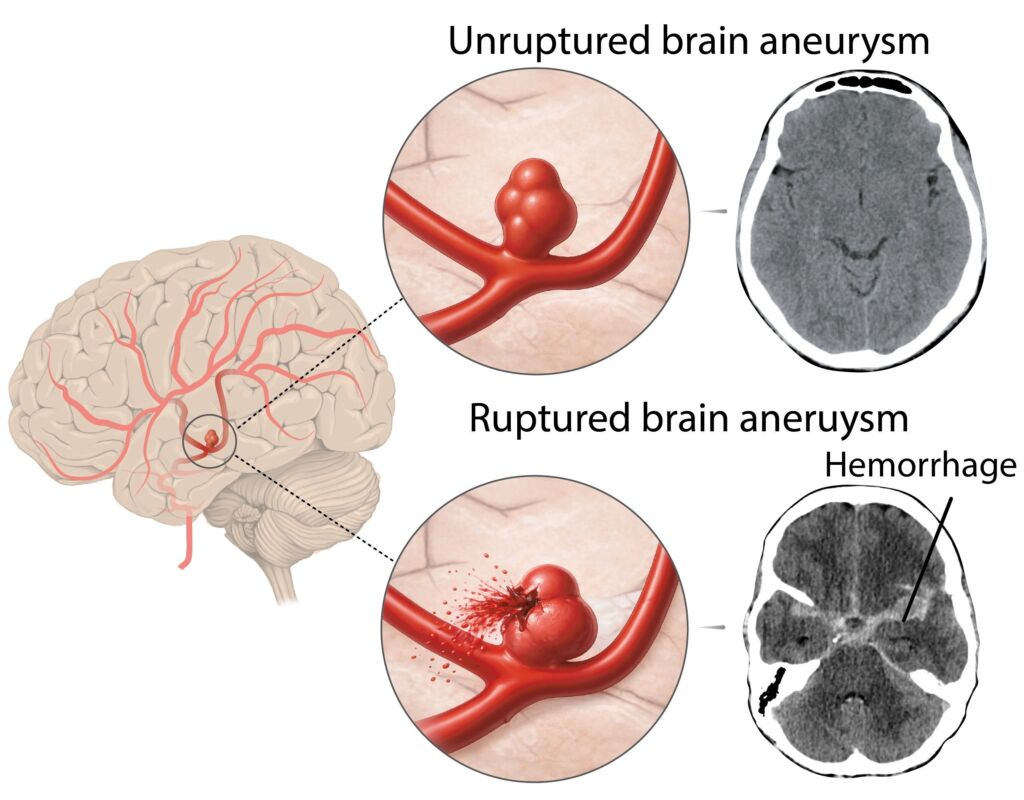
Figure 1: Unruptured and ruptured cerebral aneurysm. The diagram shows, in the upper box, an unruptured cerebral aneurysm—that is, a bulge in the wall of a blood vessel in the brain that has not burst. The CT image shown to the right depicts a healthy brain without bleeding. The box below shows a ruptured (burst) cerebral aneurysm. This causes blood to leak from the aneurysm, leading to a life-threatening brain hemorrhage known as a subarachnoid hemorrhage. The CT image on the right shows a typical view of this type of hemorrhage.

Symptoms of a Brain Aneurysm

Unruptured cerebral aneurysm

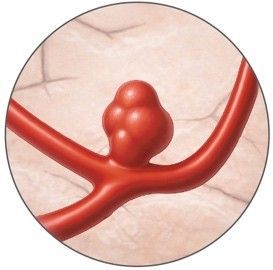
An unruptured cerebral aneurysm is a bulge in a blood vessel in the brain that has not bled. Most unruptured cerebral aneurysms do not cause any symptoms. In certain cases, however, symptoms may occur, particularly if the brain aneurysm grows in size or changes shape, thereby putting pressure on adjacent brain structures.

Nicht rupturiertes HirnaneurysmaPossible symptoms include:

  • Headaches
  • Double Images
  • Vision problems
  • Rare neurological deficits

However, most unruptured aneurysms do not cause any symptoms.

Ruptured cerebral aneurysm

A tear in the wall of a cerebral aneurysm usually occurs suddenly. When a cerebral aneurysm ruptures, blood leaks from the artery into the space between the brain and the meninges. This type of brain hemorrhage is called a subarachnoid hemorrhage and is an acute, life-threateningmedical emergency

A typical symptom is a sudden, extremely severe headache, which is often described as “the worst headache of one’s life.”Rupturiertes Hirnaneurysma

Other possible symptoms include:

  • Nausea and Vomiting
  • Light sensitivity
  • Disturbances of consciousness
  • Confusion
  • Speech Disorders
  • Symptoms of paralysis

If you experience these symptoms, you should call emergency services immediately.

How high is the risk of bleeding?

Not every cerebral aneurysm carries the same risk ofrupturing.² An individual’s risk of bleeding depends, among other things, on the following factors:

  • Size of the cerebral aneurysm
  • Location in the Brain
  • Shape (e.g., irregular blood vessel wall)
  • Growth Over Time
  • High Blood Pressure
  • Smoking
  • Family History

Since the risk of bleeding from any cerebral aneurysm must be assessed on a case-by-case basis, a careful risk assessment is crucial.

Causes of a Brain Aneurysm

The exact cause of a brain aneurysm is not always known. It is believed that various factors can contribute to the weakening of the blood vessel wall.

The most important risk factors include:

  • High Blood Pressure
  • Smoking
  • Genetic and Family History

Diagnosis of a Brain Aneurysm

Modern imaging techniques are used to accurately assess a brain aneurysm. These include, in particular:

Based on these tests, the size, location, and shape of the aneurysm can be assessed, and the individual’s risk can be evaluated.

Prevention, Early Detection, and Prognosis

Targeted prevention of brain aneurysms is not always possible. Since high blood pressure and smoking increase the risk, adopting a healthy lifestyle and reducing risk factors can help lower the risk of bleeding.

Most brain aneurysms are detected before they cause any symptoms. Whether treatment is necessary depends on an individual risk assessment. Many small aneurysms without other risk factors can be monitored to detect changes in the aneurysm at an early stage. In cases where risk factors are present, however, treatment is often recommended to reduce the risk of a severe brain hemorrhage.

The prognosis is generally favorable for aneurysms that are detected early and have not ruptured. A ruptured brain aneurysm, on the other hand, is a serious condition that requires immediate treatment at a specialized center.

Treatment for a Brain Aneurysm

Not every unruptured cerebral aneurysm requires treatment. The decision is made on a case-by-case basis by carefullyweighing the benefits and risks4. This decision is always made jointly by specialists in neurosurgery and interventional neuroradiology, together with the patient.

There are two established procedures available for treating a brain aneurysm:

  • Microsurgical clipping: The cerebral aneurysm is permanently isolated from the bloodstream using a special titanium clip.
  • Endovascular therapy: The aneurysm is sealed from the inside using a catheter, for example, through coiling, stents, or flow diverters.

  1. Vlak, M. H., Algra, A., Brandenburg, R., & Rinkel, G. J. Prevalence of unruptured intracranial aneurysms, with an emphasis on sex, age, comorbidity, country, and time period: a systematic review and meta-analysis. Lancet Neurol. 10, 626–636 (2011).
  2. Lawton, M. T. & Vates, G. E. Subarachnoid hemorrhage. N. Engl. J. Med. 377, 257–266 (2017).
  3. Greving, J. P. et al. Development of the PHASES score for predicting the risk of rupture of intracranial aneurysms: a pooled analysis of six prospective cohort studies. Lancet Neurol. 13, 59–66 (2014).
  4. Esposito, G. & Regli, L. Surgical Decision-Making for the Management of Complex Intracranial Aneurysms. Acta Neurochir. Suppl. 119, 3–11 (2014).
  5. Esposito, G. & Regli, L. Intraoperative Tools for Cerebral Bypass Surgery. Acta Neurochir. (Vienna) 160, 775–778 (2018).

World’s Best Specialized Hospitals 2026

The USZ is one of the leading centers in Switzerland and worldwide for the treatment of brain aneurysms. Our experts have many years of experience in the diagnosis and treatment of (complex) cerebral aneurysms. As in 2025, the USZ’s Department of Neurosurgery achieved the top ranking in Switzerland in its specialty in the “World’s Best Specialized Hospitals 2026” ranking. We are very pleased to receive this recognition, which underscores our team’s dedication and hard work in caring for our patients.