Severe pain and itching, followed by a rash of small blisters - these are the most noticeable characteristics of shingles. What you can't see, on the other hand, is the history that is inextricably linked to this disease: shingles, also called herpes zoster, is the result of an earlier chickenpox disease.
When these viruses become active again, the painful shingles blisters develop. They can be combated with medications that relieve the pain or contain the viruses. Timely vaccination can prevent herpes zoster from breaking out in the first place.
Overview: What is shingles?
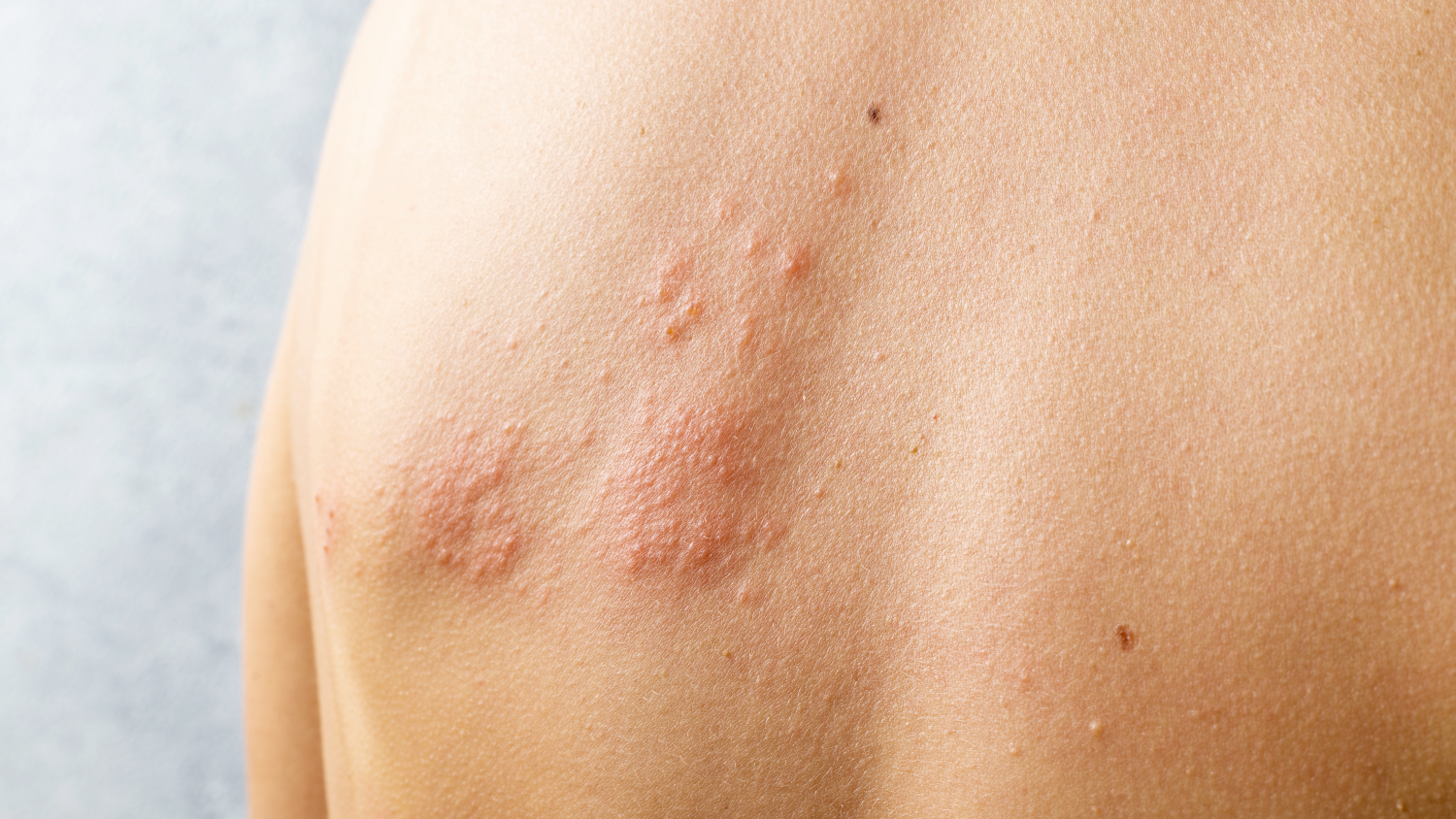
Shingles gets its name because of its typical appearance. It often causes skin rashes that run like a belt or cord over a nerve pathway under the skin.
Anyone who comes down with shingles has become infected with viruses. They belong to the herpes virus family and are also the cause of chickenpox, which always precedes shingles. Only those who have had a chickenpox infection can get herpes zoster. More than 95 percent of all adults in Switzerland contracted chickenpox in childhood. Even if you no longer remember it and this childhood disease is long behind you: The viruses that caused it, the so-called varicella zoster viruses, are still dormant in your body.
These viruses do not cause a new outbreak of chickenpox, but they can cause unpleasant shingles (herpes zoster). One in three adults will experience this at some point, usually in later life. Affected are predominantly women and men aged 50 and older, as well as people suffering from immunodeficiency. Immunocompromised people, for example after organ transplants or with serious underlying illnesses, are also at increased risk. In rare cases, however, younger people also contract herpes zoster. In total, around 20,000 to 40,000 people in Switzerland are diagnosed with shingles every year.
Origin: How does shingles (herpes zoster) develop?
Why viruses that have been inactive for years or even decades suddenly come to life and produce shingles is not precisely known. What is certain, however, is that this happens primarily when the body’s own immune defenses no longer function optimally. This can be the case in old age or in the case of an immune deficiency, such as occurs during or after a serious illness.
When the time comes, the varicella zoster viruses first begin to multiply. Subsequently, they move along nerves towards the skin, causing inflammation. In response, painful blisters filled with viruses form under the surface of the skin. They are arranged in groups and appear as a reddish rash. It is also called zoster (ancient Greek for “girdle”).
Mechanism of shingles
Dormant viruses and reactivation of viruses
Is shingles contagious?
Unlike the highly contagious chickenpox, patients suffering from shingles are hardly contagious. Nevertheless, contact with the blisters or the contents of the blisters should be avoided. This applies in particular to pregnant women, newborns and immunocompromised persons. The period in which you can contract shingles from someone who has the disease is usually around seven days. More precisely, the risk of infection begins with the appearance of the first skin blisters and ends with their complete crusting.
Shingles symptoms: How does herpes zoster manifest itself?
The first signs of shingles disease often do not yet indicate what it is – these early symptoms (= prodromal stage) are “unspecific”. Those affected often complain, for example, of pain or discomfort in a certain area of the skin, tiredness, headaches and aching limbs as well as a slight fever. These could also be signs of a flu-like infection, for example.
Only after two to three days do clearer signs usually become visible that give rise to the suspicion of shingles: Burning, pulling or stinging pain on the skin, often accompanied by itching, sometimes also by an unpleasant tingling sensation. These areas later develop a strip-like area of reddened skin, followed by blisters filled with clear fluid.
The area of skin affected by herpes zoster may be spatially narrow or more extensive, but almost always remains confined to one half of the body. Occasionally, two or three groups affected by blisters also appear on the skin – but they too do not exceed the center of the body, but remain unilaterally confined to one half of the body.
Herpes zoster usually affects the chest, back or head, less frequently an arm or leg. In principle, however, shingles can occur in any part of the body – even in the eye (zoster ophthalmicus) or ear (zoster oticus). Special care should be taken with shingles in the head and neck area. If the eye is involved, it must be examined immediately by an ophthalmologist for involvement of the eye. The same applies to the ear: zoster oticus can impair hearing and balance and should be clarified immediately by an ear, nose and throat doctor.
The small skin blisters break open after a few days, dry out and form a scab. Sometimes the pain persists for some time even though the skin has healed. The entire course, from the first signs of shingles to its end, usually takes two to four weeks.
In rare cases, painful shingles may present without a rash or blisters. It then occurs only internally and is called “zoster sine herpete” by doctors.
“It is important to see a doctor early so that shingles can be treated properly from the outset.”
Medical checkup – more information
Send a photo of the affected skin area and fill out the short questionnaire. Within 24 hours on weekdays, you will receive a reliable diagnosis from our experts. Your data will be transmitted to us encrypted and treated confidentially.
If there are no externally visible signs that clearly indicate herpes zoster, shingles can also be diagnosed with the help of laboratory tests. Even the smallest traces of the varicella zoster viruses responsible for the disease can be detected using a method called PCR (polymerase chain reaction). In this process, a tiny amount of the genetic material contained in the viruses is amplified and analyzed. If no viral fluid-filled skin blisters are present, blood can also be taken as the basis for testing.
Cause and risk factors: Why does shingles develop?
It is yet unknown why varicella-zoster viruses, which have been “dormant” for a long time, awaken at a certain time and become active. However, it is known which factors can promote such an awakening. These are factors that weaken the immune system, making it difficult for the body to defend itself against the shingles virus. Here are some examples:
congenital immunodeficiencies
Immunodeficiency following an illness (e.g. HIV infection)
suppressed immune defense due to medication (e.g. chemotherapy)
uv radiation (e.g. excessive exposure to the sun)
toxins
physical overexertion
Stress
Shingles progression
In most cases, shingles heals within a few weeks. In about 70 percent of patients, no consequences remain. Especially in younger patients, the course of the disease is usually harmless, and the pain is also usually less pronounced in them than in adults.
If you want to positively influence the course of your herpes zoster infection, you should seek medical treatment as early as possible. This is because the medications used to contain the shingles viruses work best when given at the onset of the disease.
But not always do shingles proceed harmlessly. Complications may occur. About ten percent of all patients must therefore be hospitalized.
For example, shingles can cause painful nerve inflammation that can persist for months or even years in extreme cases. Such painful nerve inflammation is called post-zosteric neuralgia, post-zoster neuralgia or post-herpetic neuralgia. The risk of developing the disease increases from the age of 50 and grows with age. Postzosteric neuralgia may occur especially after shingles in the head. However, most patients with shingles (namely 90 percent of them) are spared such a painful nervous condition.
Shingles can be problematic if it occurs in the area of an eye. The so-called zoster ophthalmicus, also called facial erysipelas, carries the risk of various inflammations. Among other things, they can damage the cornea or optic nerve and, if left untreated, can even lead to blindness.
Therapy: How is shingles treated?
When doctors or physicians treat shingles, they have two therapeutic goals in mind: They want to reduce the pain and they try to stop the viruses from multiplying.
A number of medications are available to contain the spread of the virus. They are called antivirals. Well-known active ingredients include valaciclovir, aciclovir, brivudin and famciclovir. The medications, often given in tablet form, may also reduce the risk of postzoster neuralgia. To minimize the pain and duration of shingles, treatment should begin early – ideally within two or three days after the first signs of the disease appear.
Various medications are available to relieve the pain. The well-known active ingredients ibuprofen or paracetamol are often used. Opioids (colloquially known as “opiates”) can help with particularly severe pain. These include, for example, the active ingredient oxycodone. In addition, solutions for application to the skin should ensure that the reddened rashes dry out more quickly. Ointments or tinctures can relieve the annoying itching.
In addition to drug treatment, careful skin care is also recommended to support the healing of the affected areas and prevent infections.
Prevention: Can shingles be prevented?
Vaccination can protect against the outbreak of shingles with its unpleasant accompanying symptoms. The so-called subunit vaccine is a dead vaccine. This means: it contains killed components of the viruses. They cannot multiply, but cause the immune system to produce defense cells. Thus, in an emergency, the body is better prepared against an attack of the varicella-zoster viruses and can fight them more easily. Vaccination against herpes zoster is particularly recommended for people with an increased risk (age, previous illnesses, previous herpes zoster, etc.). For details on the herpes zoster vaccine, ask your doctor.
Shingles usually appears as a one-sided skin rash with reddened areas and small, painful blisters filled with fluid. These follow the course of a nerve, often in the area of the trunk or face. The rash is often accompanied by a burning, stinging or tingling sensation in the affected area.
After reactivation of the varicella zoster virus, it usually takes a few days for the first symptoms to appear. Initially, those affected often only experience skin pain or discomfort. The typical vesicle rash usually follows 2 to 5 days later.
In most cases, the disease remains confined to a clearly defined area of skin – typically along a single nerve. Within a few days, blisters develop at this site, which gradually change. Spread to other parts of the body is rare and usually only occurs when the immune system is severely weakened
Seek medical help as soon as possible if you suspect you have the disease – ideally within 72 hours of the first symptoms appearing. Antiviral medication can help to mitigate the course of the disease and prevent consequential damage. Painkillers and soothing skin care are also used. Cooling and avoiding friction can also provide relief.
Mild symptoms can often be alleviated with paracetamol or ibuprofen. For more severe nerve pain, targeted medication is used – for example, certain antidepressants or antiepileptic drugs. The choice of pain therapy depends on the intensity and course of the symptoms.
Yes. With the right treatment, the disease heals completely in most cases. It is important to act early in order to reduce the risk of possible long-term consequences such as chronic nerve pain. The healing process is individual – younger, healthy people usually recover more quickly than older or immunocompromised people.
The acute phase with skin changes usually lasts about two to four weeks. The blisters go through various stages – from reddening and blistering to crusting and healing. In some cases, however, the pain may persist beyond this period.
As long as fresh blisters are present, there is a risk of infection – especially through direct skin contact. Once the skin is completely encrusted, the infection period is considered to be over. People who have not yet had chickenpox can become infected and then contract chickenpox, not shingles. Newborns, pregnant women and immunocompromised persons are particularly at risk of a severe course.
This rare form, also known as “zoster sine herpete”, occurs without visible skin changes – but still causes nerve pain. As the typical rash is missing, the diagnosis is often delayed. A reliable diagnosis is then only possible using laboratory procedures such as the polymerase chain reaction. Early treatment is nevertheless important in order to alleviate symptoms and avoid complications.
Yes, in rare cases the virus can also spread to internal structures such as organs or blood vessels. This mainly affects people with a severely weakened immune system. The symptoms depend on the area affected and can cause breathing difficulties or abdominal pain, for example. Rapid medical clarification is particularly important here.