Skin – structure, function, diseases
The skin is much more than just our outer protective layer. With an area of around one and a half to two square meters, it is the largest organ in the human body. Depending on body size, the skin alone weighs between 3.5 and 10 kilograms. It fulfills a number of important tasks. It protects us around the clock from shocks, heat, cold, moisture, light and pathogens. At the same time, we receive information from our surroundings via our skin as a sensory organ and are constantly in direct contact with the outside world.
The skin fulfills many important tasks. It protects our body from external influences such as bacteria, UV radiation and injuries. It also regulates body temperature, stores water and helps to maintain fluid balance. Our “skin organ” consists of several layers: the epidermis, the dermis and the subcutis. It reacts to touch, temperature and pain and is an important part of our sense of touch. Healthy skin is crucial for our general well-being.
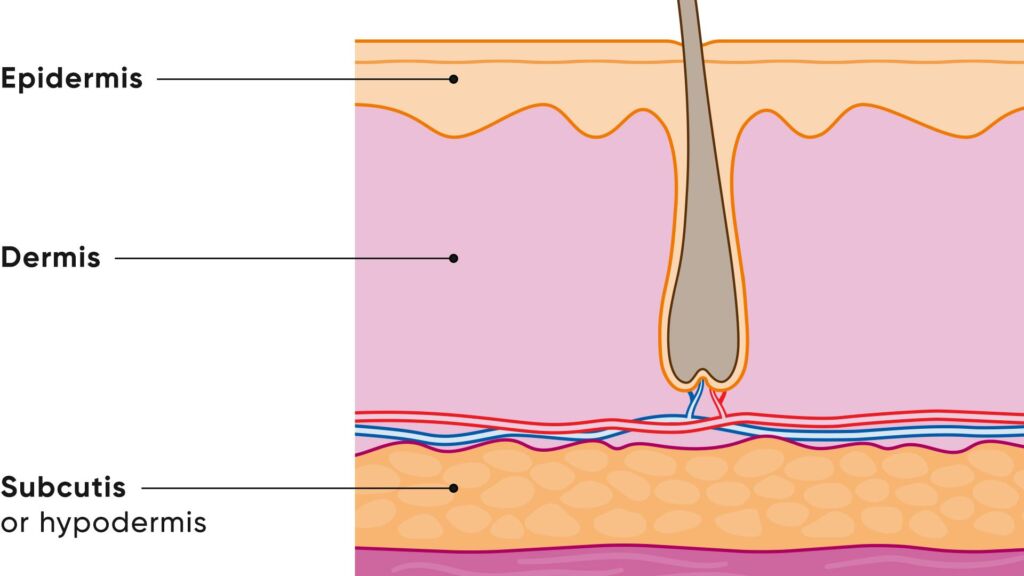
Our skin has different structures and properties in different places. The skin consists of three main layers: the epidermis, the dermis and the subcutis. Here you will find an overview of the structure of the skin layers.
Structure of the skin – The layers of the skin:
The epidermis
It is the top layer of skin and is about as thick as a sheet of paper. It consists of the horny layer and the germ layer:
- The horny layer is our outermost protective barrier and has the task of protecting us from injuries, dehydration and pathogens.
- The germ layer continuously forms new cells to renew the horny layer. It consists of the basal cell layer and the prickle cell layer.
- The basal cell layer, the lowest layer of the epidermis, contains the stem cells from which the skin cells (keratinocytes) develop. These migrate upwards into the spiny cell layer, where they gradually harden, lose their nucleus and become horny cells. The basal cell layer also contains melanocytes, which produce the pigment melanin. Melanin determines the color and tanning of the skin. The prickle cell layer also contains immune cells, the so-called Langerhans cells.
The dermis (dermis or corium)
The dermis lies directly under the epidermis. This stretchy, collagen fiber-rich layer of skin contains nerves, blood vessels, hair follicles and sebaceous glands. It supplies the skin with nutrients and plays an important role in temperature regulation. Sweat glands are located in the dermis, which cool our body by releasing sweat and protect the skin from drying out. It contains elastic fibers that give the skin flexibility and firmness at the same time.
The dermis is particularly affected by the ageing process. This layer contains blood and lymph vessels as well as skin appendages such as hair follicles, sebaceous glands and the aforementioned sweat glands. Numerous nerve fibers ensure the perception of touch and vibrations. Together with the epidermis, the dermis forms the so-called cutis.
The hypodermis (subcutis)
This deepest layer consists of loose fat and connective tissue. It serves as padding, protects us from mechanical stress and helps to regulate body temperature.
The main task of the skin is to protect our body. Their vital importance becomes particularly clear when large areas of skin are injured by burns, for example. Even the loss of 20 percent of our skin can be life-threatening. In addition to its protective function, the skin performs other important tasks and thus ensures a stable internal “climate”.
With its complex structure, the skin is one of the most important organs in our body with a wide range of tasks.
Functions of the skin
- Protective function: The skin is an important part of our immune system. It protects our body from harmful external influences such as bacteria, viruses, pollutants, UV radiation and mechanical injuries. Its outer layer, the horny layer, forms a barrier that prevents the penetration of pathogens and reduces the loss of water or important nutrients.
- Temperature regulation: The skin helps to stabilize our body temperature. When it is hot, the body produces sweat, which cools through evaporation. When it is cold, the blood vessels in the skin contract to reduce heat loss.
- Sensory organ skin – sense of touch and perception: The body perceives touch, pressure, temperature and pain via nerve endings in the skin. These stimuli are transmitted to the brain and enable us to react quickly to external influences, such as quickly pulling our hand away from a hot surface.
- Absorption of active ingredients: The skin is able to absorb certain substances such as vitamins or medication in the form of ointments and creams.
- Elimination and detoxification: The skin also helps to detoxify our body by eliminating waste products and excess salts through sweat.
- Vitamin D production: The skin plays a central role in the production of vitamin D. It converts sunlight (UV-B radiation) into an active form of vitamin D that is important for our bone health and immune defense.
- Moisture barrier: The skin forms a natural barrier that regulates our water balance. This function is supported by lipids (fats) that are formed in the skin and prevent too much moisture from being lost.
There are a variety of skin problems and skin diseases that have different causes. The severity and symptoms of these diseases can vary. If you notice any unusual skin changes or symptoms that persist over a longer period of time, you should consult a dermatologist.
Get an overview of common skin problems and skin diseases:
Skin allergies
Allergic reactions to certain substances, such as cosmetics, medication or plants, can lead to contact eczema and skin reactions such as redness, itching, wheals or swelling. Sun allergy after excessive sun exposure is also possible.
Acne
Acne is one of the most common skin diseases and occurs when the sebaceous glands become blocked and inflamed. Adolescents are particularly affected, as hormonal changes play a role (hormonal acne). Acne manifests itself in the form of blackheads, pimples and sometimes cysts, usually on the face, chest or back.
Skin infections
Skin infections can be caused by bacteria, viruses, fungi or parasites. The most common skin infections include
- Bacterial infections: These include impetigo or abscesses caused by bacteria such as staphylococci or streptococci.
- Viral infections: These include herpes simplex (cold sores) or the virus that causes chickenpox(shingles).
- Fungal infections: These include skin fungus, athlete’s foot, nail fungus or ringworm, which are caused by fungi.
- Parasitic infections: These include scabies, which is caused by mites.
Skin cancer
Different types of skin cancer can develop from different types of skin cells. Skin cancer generally occurs on areas of the body that are exposed to strong UV radiation over a long period of time. Early detection of suspicious skin changes plays a decisive role in successful treatment.
Not every mole means skin cancer. The skin changes with age and new moles can appear – most of them are harmless. It is therefore important to regularly examine the skin yourself in order to recognize changes at an early stage.
Pigment disorders
Pigment disorders such as a lack of pigmentation (depigmentation) or dark spots on the skin(melasma, often caused by sun exposure or hormonal changes) affect the skin’s melanin production. The growth of moles can also lead to a change in skin color, which occasionally requires a medical examination. Find out more about the treatment of pigmentation disorders and scars with nanofat.
Rosacea
Rosacea is a chronic skin disease characterized by redness on the face, visible blood vessels and sometimes also pimples and pustules. It often occurs in adults and mainly affects the cheeks, forehead and nose.
Psoriasis (psoriasis)
Psoriasis is a chronic inflammatory skin disease in which the skin cells are renewed too quickly. This causes red, scaly patches on the skin. Psoriasis on the scalp and skin can be itchy and sometimes painful. Psoriasis can be triggered by genetic factors and environmental influences.
Eczema (atopic)
Eczema is an inflammatory skin condition that is often accompanied by itching (itchy skin, itchy scalp), redness and scaling. Eczema is not contagious and can occur both acutely and chronically. They are caused by an overreaction of the skin to external (e.g. allergens, irritants) or internal (e.g. genetic or immunological) influences. The most common forms of eczema include
Neurodermatitis (atopic dermatitis)
Atopic dermatitis is a chronic inflammatory skin disease that is usually accompanied by severe itching (all over the body), dry skin, redness and scaling of the skin. It often occurs in episodes, which means that the symptoms can temporarily improve or worsen. It is assumed that genetic predisposition, a weakened immune system and environmental factors play a role in the development of the disease. Atopic dermatitis often occurs in childhood, but can also affect adults. In Switzerland, around 5 to 15 percent of the population are affected by atopic dermatitis. For adults, the figure is less than six percent. The symptoms often improve with age or even disappear completely.
Treatment depends on the severity of the atopic dermatitis and aims to care for the skin, relieve itching and combat inflammation.
Seborrheic eczema (seborrheic dermatitis)
Seborrhoeic eczema is a chronic inflammatory skin disease that mainly affects oily skin areas such as the scalp, face (for example on the wings of the nose, eyebrows and behind the ears) as well as the upper chest and back. It manifests itself as reddening of the skin, scaling and sometimes mild itching. The exact cause is not yet fully understood, but it is thought that a combination of excessive sebum production, skin fungi (Malassezia) and genetic predisposition play a role. Factors such as stress, cold and hormonal changes can exacerbate the symptoms. The disease is not contagious and can usually be treated well with special care products, antifungal creams or shampoos.
Contact eczema
Contact dermatitis is one of the most common skin diseases and is caused by a hypersensitivity reaction to certain substances. Typical symptoms are redness, itching and/or the formation of blisters on the area of skin that has come into contact with the triggering substance. With the right treatment, contact dermatitis usually heals completely within a few weeks. The key is to consistently avoid the trigger. The most important allergy test is the epicutaneous test (patch test).
Dyshidrotic eczema (dyshidrosis, pompholyx)
Dyshidrotic eczema is a special form of eczema that mainly occurs on the hands and feet. It manifests itself by the formation of small, very itchy blisters on the sides of the fingers, palms of the hands or soles of the feet. The skin can become inflamed, flake or tear. The exact cause is not always clear here either. Possible triggers include stress, allergies, contact with irritants or excessive sweating. Heat or humidity can aggravate the symptoms. Avoiding triggers is an important part of the therapy.
