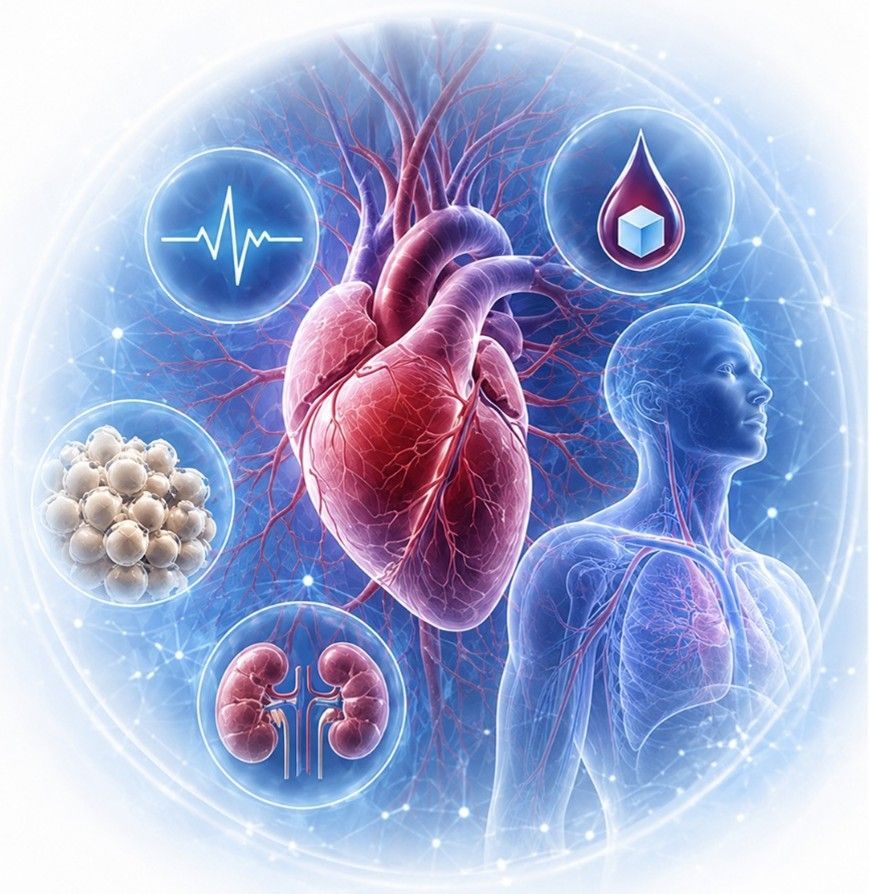
Erectile dysfunction is common and is often viewed as purely a urological problem. In fact, it can be an early warning sign of vascular disease. Identifying the cause early on can not only improve sexual health but also protect the heart and circulatory system.
When people think of erectile dysfunction, they usually think of a sexual problem. However, there may be much more to these symptoms than meets the eye. For an erection to occur, the blood vessels in the penis must be able to transport and store enough blood. If the vessels are narrowed or damaged, this mechanism can be disrupted. Often, the same risk factors that contribute to cardiovascular disease also play a role here: high blood pressure, diabetes, high blood lipid levels, obesity, or smoking.
Since the blood vessels in the penis are significantly smaller than the coronary arteries, they often show signs of change earlier. Erectile dysfunction can therefore occur years before a heart attack or other cardiovascular diseases. This presents an important opportunity for those affected: if risk factors are identified and treated early, potential complications can often be prevented or delayed. For this reason, experts today view erectile dysfunction not only as a urological issue but also, in many cases, as a vascular issue.
More Than Just an Intimate Problem
“Erectile dysfunction can be an early sign of vascular disease. In younger men, there are sometimes previously undiagnosed venous outflow disorders that are not necessarily associated with systemic cardiovascular disease. In men aged 40–50 and older, however, erectile dysfunction may be caused by atherosclerosis and may indicate an increased risk of heart attack, stroke, or other arterial events. That is why it is worth getting to the root of the problem rather than just treating the symptoms,” says Stefano Barco, Ph.D., Prof. Dr. med., Chief Physician at the Department of Angiology at the USZ.
Not every case of erectile dysfunction is caused by a vascular problem. Hormonal changes, neurological disorders, or psychological stress can also play a role. However, if cardiovascular risk factors are present or if symptoms gradually worsen, blood flow should also be evaluated. At the USZ, we use modern techniques to assess the arterial blood supply and venous outflow of the penis. This allows us to determine whether a vascular condition is present and which treatment options are appropriate.
In addition, the evaluation makes it possible to identify previously undetected risk factors for cardiovascular disease. It often becomes apparent that several factors interact and should be treated together.
Erectile Dysfunction: When the Cause Lies in the Blood Vessels
Erectile dysfunction can be a sign of vascular disease and should be evaluated by a doctor. Learn more about possible causes, modern diagnostic methods, and personalized treatment options.
Examine the heart at the same time
The close connection between vascular health, metabolism, and the heart makes a holistic approach particularly important. That is why the USZ’s cardiometabolic clinic provides a comprehensive assessment of an individual’s risk for cardiovascular and metabolic diseases.
Factors taken into account include blood pressure, blood sugar, blood lipids, body composition, and other risk factors. The goal is to prevent heart attacks, strokes, and other related conditions as early as possible.
“Many risk factors for cardiovascular disease can be successfully treated. The earlier they are detected, the greater the chances of preventing long-term damage,” says Francesco Paneni, Prof. Dr. med., Chief Physician at the Department of Cardiology.
The good news: Even small changes can make a big difference. Regular exercise, a balanced diet, quitting smoking, and consistent treatment of high blood pressure, diabetes, or high cholesterol not only promote heart health but can also have a positive effect on erectile function. Those who view erectile dysfunction as a potential warning sign gain the opportunity to holistically improve their overall health.