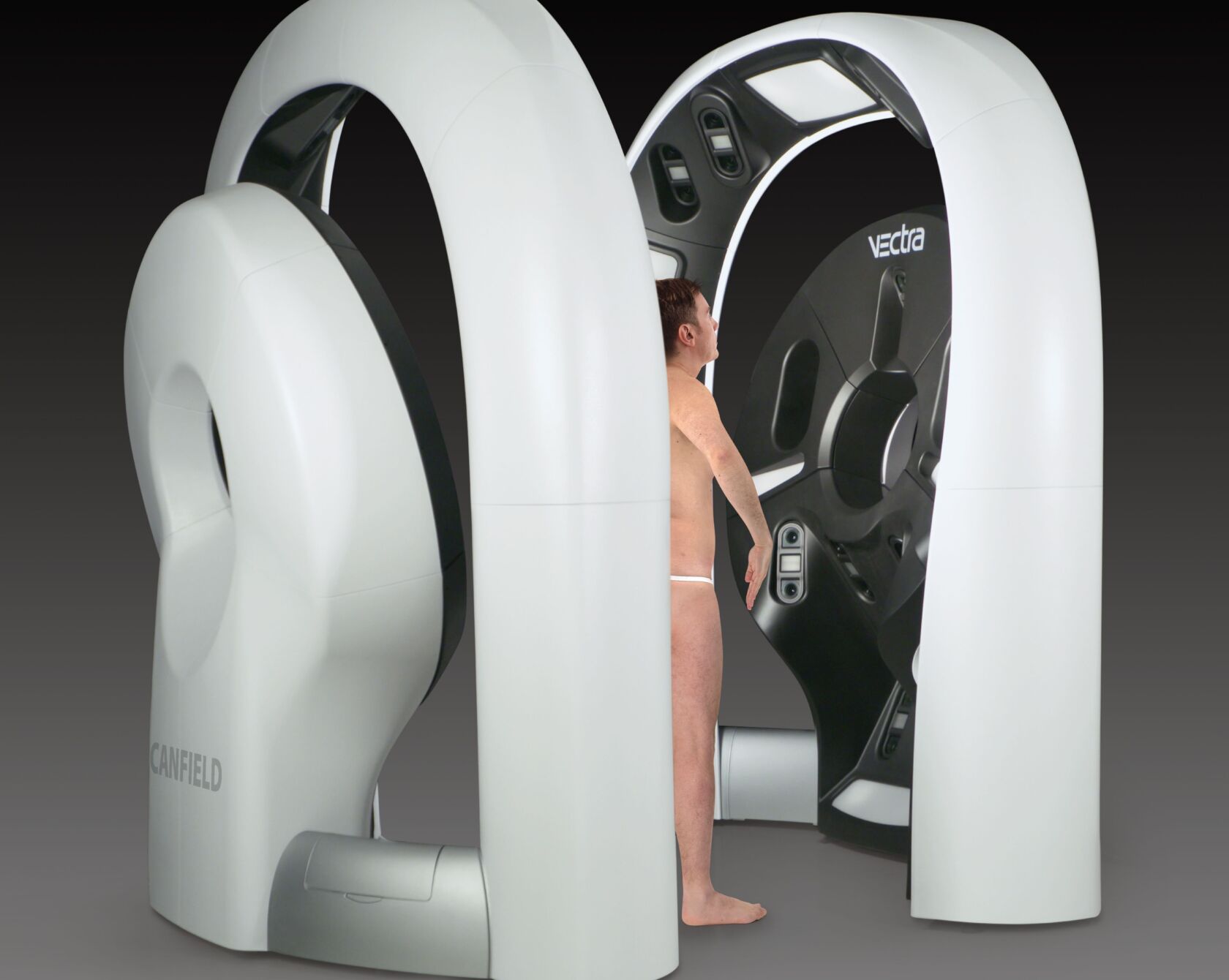
At the University Hospital Zurich, an innovative 3D whole-body photography system captures the entire surface of the skin in just a few seconds. Recording with 92 cameras makes it possible to detect skin changes at an early stage and with particular accuracy.
The earlier skin cancer is detected, the better the chances of treatment. With the VECTRA® 3D whole-body photography system, the USZ offers an innovative addition to classic skin examinations. The technology is particularly suitable for people with an increased risk of black skin cancer – for example, if they have many or irregular moles, a history of melanoma(black skin cancer) or a family history of the disease.
Suitability and functionality of the new method
The special feature of the procedure: 92 cameras simultaneously record images of the entire body and use them to create a detailed, three-dimensional image of the skin in just a few seconds. This digital “skin map” shows all moles and pigment spots and serves as a starting point for subsequent checks.
Advantages compared to the classic examination
In follow-up examinations, the new images can be compared exactly with earlier images. This allows even the smallest changes or newly formed moles to be detected and assessed at an early stage. The examination is simple and pleasant for patients: the images are taken in a few seconds without touching, without pain and without radiation exposure.
The 3D scanner does not replace an examination by a dermatologist, but complements it decisively: While the medical examination provides an important momentary impression, 3D technology enables precise observation of the progress over time. This means that abnormalities can be detected more quickly, unnecessary interventions can be avoided and decisions can be better secured.
With this new technology, the USZ is strengthening individual skin cancer screening and enabling patients at higher risk to receive early diagnosis and targeted treatment.
Making an appointment for a 3D scanner
Patients can be referred to the USZ by their attending physician for an examination with the 3D scanner. If there is an increased risk of black skin cancer, the costs are usually covered by health insurance.